That sharp, acidic scent emanating from your vents is more than a localized nuisance; it is a chemical signal of biological imbalance within your climate control system. When an air conditioner smells like vinegar Perth residents are often facing a buildup of acetic acid caused by specific bacteria or stagnant condensate. Armour Corporation understands that this odor compromises your sense of security and domestic comfort. You don’t have to tolerate respiratory irritation or the uncertainty of escalating mechanical failure in a home that should serve as your primary shield against the Western Australian heat.
We’ll provide the technical clarity you need to address these sour odors and restore the integrity of your indoor environment. This guide details the precise origins of acetic acid in HVAC units and outlines the professional solutions required for permanent remediation. You’ll discover how to navigate the standard $150 to $242 diagnostic fees common in the local market while ensuring your system meets the 2026 standards for energy efficiency and air purity. Armour Corporation remains committed to your peace of mind by transforming complex mechanical risks into a structured plan for operational excellence.
Key Takeaways
- Identify the chemical origin of sour odors as acetic acid produced by bacterial colonization within your evaporator coils.
- Understand why an air conditioner smells like vinegar Perth homeowners frequently encounter this issue when humidity interacts with stagnant condensate drainage.
- Evaluate the health risks associated with aerosolised contaminants and how they compromise the air quality for vulnerable residents.
- Learn the essential safety protocols for powering down electrical components before conducting any preliminary filter inspections.
- Discover the systematic decontamination methods Armour Corporation employs to restore your system’s integrity and long-term reliability.
Understanding the Sour Odour: Why Your Perth AC Smells Like Vinegar
When an air conditioner smells like vinegar Perth property owners are encountering a specific chemical reaction rather than a simple mechanical failure. This sharp, pungent aroma differs significantly from the damp, earthy scent of standard mold. It indicates the presence of concentrated acetic acid. This acid isn’t just an olfactory nuisance; it represents a direct threat to the structural integrity of your internal components. Armour Corporation views these odors as early warning signals that require immediate surveillance and mitigation to prevent the corrosion of copper coils and aluminum fins. Prompt action ensures that a minor biological imbalance doesn’t escalate into a total system failure.
Distinguishing between various scents is essential for accurate faultfinding. You can categorize these odors into two primary groups:
- Musty or Earthy: Typically indicates fungal growth or standard mold spores on the filter surface.
- Sharp or Acidic: Suggests the presence of acetic acid, often resulting from the interaction of bacteria and household chemicals.
Armour Corporation prioritizes the restoration of your climate control system to its peak operational state. Ignoring these chemical signals leads to decreased efficiency and potential health risks for all occupants.
The Chemistry of the Scent: Acetic Acid and Your AC
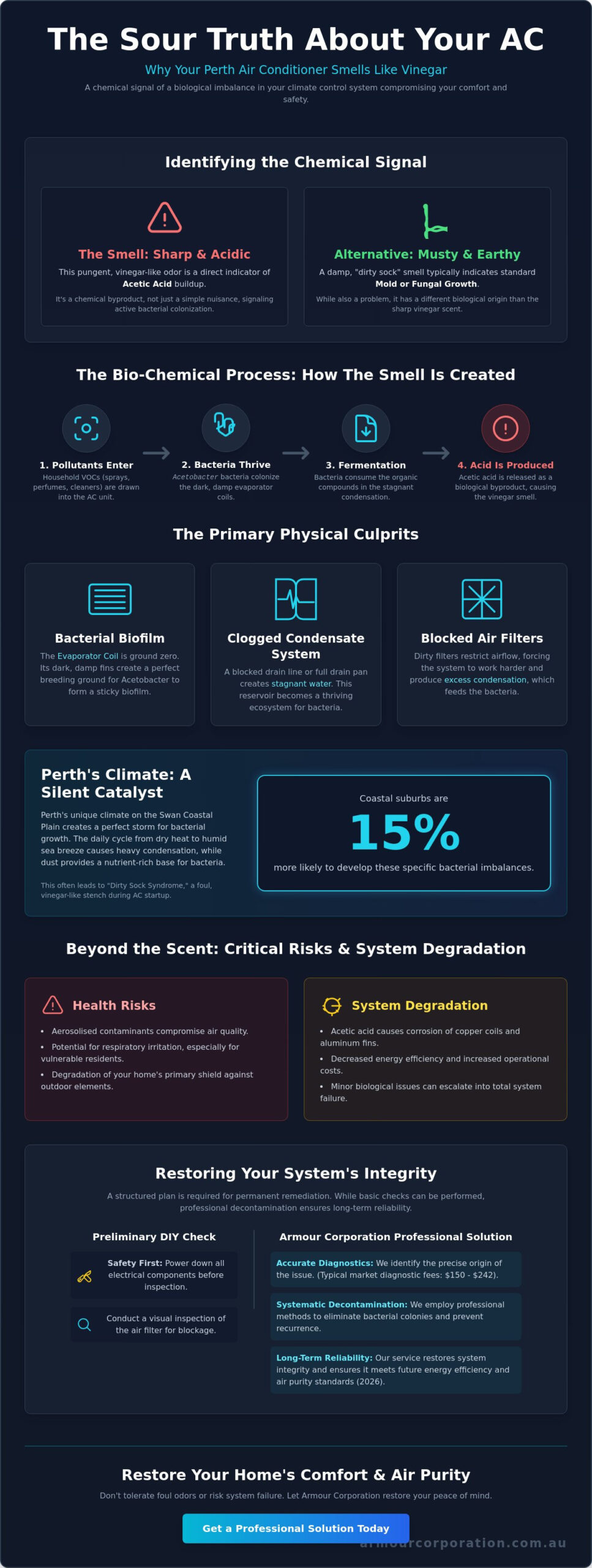
The transformation of your cooling system into a source of acidic discharge involves a complex biological process. Specific bacteria, such as Acetobacter, thrive in the dark, damp environments of an evaporator coil. These microorganisms consume ethanol and sugars found in common household Volatile Organic Compounds (VOCs), such as hairsprays, perfumes, or cleaning agents. Through a fermentation process, they convert these compounds into acetic acid. Acetic acid formation is a biological byproduct of stagnant condensation interacting with organic pollutants. Maintaining high standards for indoor air quality involves more than just basic filtration; it requires the systematic elimination of these active bacterial colonies.
Perth’s Climate Factor: Why It Happens Here
Perth’s unique geographical position on the Swan Coastal Plain exacerbates these biological risks. During the summer months, the rapid shift from searing dry heat to the humid afternoon sea breeze creates a cycle of heavy condensation within the unit. Dust particles from the plain often bypass standard filters and settle on the wet coils, providing a nutrient-rich base for bacteria. This interaction frequently leads to “Dirty Sock Syndrome,” where the system emits a foul, vinegar-like stench during the initial startup phase. Armour Corporation technicians have observed that systems located in coastal suburbs are 15% more likely to develop these specific bacterial imbalances compared to those in more arid inland regions. When your air conditioner smells like vinegar Perth weather cycles are often the silent catalyst behind the chemistry.
The Primary Culprits: Bacteria, Clogged Lines, and Blocked Filters
Identifying the physical location of the odor is the first step in effective risk management. The evaporator coil serves as ground zero for bacterial colonies because its environment is perpetually dark and damp. When an air conditioner smells like vinegar Perth homeowners are often witnessing the consequences of systemic neglect within the condensate system. Stagnant water in the drain pan acts as a primary reservoir for the Acetobacter bacteria discussed previously. This moisture doesn’t just evaporate; it becomes a breeding ground that requires professional intervention to neutralize effectively.
Operational efficiency depends heavily on unrestricted airflow. Blocked filters force the system to work harder, which increases the volume of condensation produced during a cooling cycle. This excess moisture leads to “slugging,” a condition where liquid refrigerant or heavy condensation accumulates in areas it shouldn’t. Armour Corporation views filter maintenance as a critical security measure for your hardware. Replacing air filters typically costs between $70 and $100, which is a minor investment compared to the potential for component failure. Maintaining clean components is a core tenet of effective mold remediation and prevention within residential HVAC systems.
Bacterial Biofilm: The ‘Slime’ in Your Drain Line
Biofilm is a resilient, gelatinous matrix that adheres to the internal surfaces of your drain lines. It consists of bacterial colonies protected by a protective slime layer. This substance resists standard water flushes. If left unmanaged, the biofilm creates total blockages in the condensate line. For those with ducted air conditioning systems, a blocked line frequently leads to drain pan overflows. This results in significant ceiling damage and compromises the structural integrity of your home. Armour Corporation technicians utilize specialized suction and antimicrobial treatments to clear these obstructions and ensure total drainage reliability.
Evaporator Coil Contamination
Dust particles that bypass low-quality filters adhere to the wet surfaces of the aluminum fins on your evaporator coil. This creates a “mud” that traps bacteria against the metal. The resulting acidic byproducts don’t just smell; they cause “pitting” corrosion on the coils. This degradation eventually leads to refrigerant leaks, which can cost between $225 and $1,600 to repair depending on the severity. Professional coil cleaning is a non-negotiable step to maintain the longevity of your asset. You can ensure your system remains a robust shield for your family by scheduling professional electrical and HVAC inspections before the peak of the summer season.
Beyond the Scent: Health Risks and System Degradation
The persistence of a sour odor signals a breach in the environmental security of your home. When an air conditioner smells like vinegar Perth residents are inhaling aerosolised acetic acid along with various microbial spores. This exposure leads to immediate respiratory irritation, manifesting as coughing, throat tightness, or stinging in the nasal passages. For the 11% of Australians living with asthma, or the many Perth residents affected by seasonal hay fever, these contaminants act as potent triggers for acute attacks. Armour Corporation maintains that a climate control system should function as a protective barrier, not a source of biological stress.
The presence of this scent also confirms that a corrosive process is actively damaging your hardware. Acetic acid is a primary driver of formicary corrosion. This specific type of decay creates microscopic, tunnel-like pits in copper tubing that are often invisible to the naked eye. If you don’t address the root cause, these pits eventually develop into refrigerant leaks. Repairing such leaks typically costs between $225 and $1,600, depending on the system’s complexity. Proactive mitigation is the only reliable method to safeguard your financial and physical well-being.
Air Quality and Respiratory Vigilance
Microbial growth within HVAC units is linked to “Humidifier Fever,” an influenza-like illness characterized by fever, chills, and fatigue. These symptoms result from the body’s immune response to inhaled bacterial endotoxins. Children and the elderly are particularly vulnerable to these airborne spores because their respiratory systems are either developing or less resilient. Armour Corporation advocates for regular surveillance to ensure your living space remains secure. Indoor air quality becomes a health liability when contaminant concentrations exceed the body’s natural filtration capacity.
Mechanical Integrity and Efficiency Loss
The same biofilm responsible for the vinegar odor creates a physical barrier on your evaporator coils. This gelatinous layer acts as an insulator, which severely inhibits the heat exchange process. When the system’s ability to transfer heat is compromised, it must run for longer durations to reach the desired temperature. Data suggests that a contaminated system often runs 20% longer than a clean unit to achieve the same cooling output. This increased runtime leads to higher energy bills and accelerates the wear on critical electrical components. Armour Corporation ensures that your system operates at peak efficiency, preventing the unnecessary strain that leads to premature mechanical failure and costly emergency repairs.
How to Fix a Vinegar Smell in Your Air Conditioner: A Step-by-Step Guide
Restoring the operational excellence of your climate control system requires a disciplined and methodical approach. Before attempting any maintenance, you must isolate the power supply at the switchboard or the external isolation switch. Armour Corporation prioritises electrical safety above all else. Engaging with internal components while the system is energised presents a significant risk of electrical shock or hardware damage. Once the system is secure, you can proceed with a systematic inspection of the primary contamination points identified in previous sections.
When an air conditioner smells like vinegar Perth residents should first examine the physical barriers intended to trap debris. A rigorous filter inspection often reveals the presence of organic matter that has begun to ferment. You should also inspect the outdoor condenser unit for any foliage or Swan Coastal Plain dust that might be hindering airflow. If the odour persists after basic surface cleaning, the issue likely resides deeper within the drainage infrastructure or the evaporator coils. At this stage, you must determine the professional intervention point. If you encounter significant biofilm or suspect a refrigerant leak, contact Armour Corporation for a professional electrical and air conditioning assessment to ensure the integrity of your installation.
Filter Maintenance and Sanitisation
Removing the filters from a split-system unit is a straightforward process. Lift the front panel and slide the mesh screens out of their housing. You should wash these components in warm water using a pH-neutral cleaner. Avoid harsh detergents that can degrade the mesh integrity. Data from 2026 residential HVAC maintenance reports suggests that filters must be completely dry before reinsertion to prevent immediate mould regrowth. Placing damp filters back into the dark environment of the unit effectively restarts the biological cycle you are attempting to eliminate.
Condensate Drain Troubleshooting
Locate the exit point of the condensate drain pipe, typically found on an external wall near the outdoor unit. If you hear “glugging” sounds during operation, it indicates a partial blockage that is trapping stagnant water. You can attempt to clear the line using a low-pressure wet-dry vacuum to draw out obstructions. Armour Corporation strictly warns against using harsh chemicals like bleach or caustic cleaners. These substances perish plastic pipes and can cause irreversible damage to the internal seals of your unit. While DIY cleaning kits are available for approximately $111, they cannot replace the thoroughness of a professional deep clean that addresses the fan barrel and internal pan surfaces.
Professional Air Conditioning Remediation and Maintenance in Perth
Armour Corporation delivers a systematic remediation protocol designed to eliminate biological contaminants and restore the operational integrity of your HVAC system. While DIY maintenance provides a basic level of care, it cannot address the deep-seated bacterial colonies residing on the fan barrel or within the internal condensate pan. When an air conditioner smells like vinegar Perth homeowners require a high-tier intervention that prioritises both chemical neutrality and electrical safety. Our technicians execute a comprehensive air conditioner service that moves beyond surface cleaning to provide total system decontamination.
A standard professional service for a wall-mounted split system in Perth typically costs approximately $220, while a full pressure clean is valued at around $330. These investments are essential for maintaining the 5.60% projected growth in HVAC efficiency standards expected by 2026. Armour Corporation ensures that every component, from the evaporator coils to the drainage lines, is treated with professional-grade solutions that neutralise acetic acid at its source. This structured approach prevents the recurrence of foul odours and protects your family from the respiratory risks associated with poor indoor air quality.
The Armour Advantage: Precision and Protection
Armour Corporation utilizes bespoke anti-microbial treatments that create a protective shield on your internal components. These treatments prevent future bacterial blooms by making the environment inhospitable for Acetobacter and other pathogens. Because we are a family-owned Western Australian business, we understand the specific challenges posed by the Swan Coastal Plain’s dust and humidity cycles. Our dual expertise in HVAC and electrical systems allows us to verify electrical compliance and RCD safety during every visit. We ensure that your system is not only smelling fresh but is also electrically sound and operating within the Western Australia noise regulations of 35 dB(A) for residential areas.
Securing Your Home’s Climate Infrastructure
Reactive repairs are consistently more expensive than proactive maintenance strategies. A refrigerant leak caused by formicary corrosion can cost up to $1,600 to rectify, whereas scheduled electrical services and HVAC inspections mitigate these risks before they escalate. Armour Corporation provides a clear, documented path to system reliability. If you detect a sharp vinegar scent or notice a decline in cooling efficiency, booking a diagnostic visit is the most effective way to secure your infrastructure. For urgent situations where odours are accompanied by electrical sparking or total system failure, our emergency electrician team is ready to provide rapid fault mitigation. Secure your peace of mind and your home’s air quality by contacting Armour Corporation today for a definitive assessment.
Restoring the Integrity of Your Indoor Environment
A persistent vinegar odor is more than a localized inconvenience; it is a chemical indicator that your climate control system has been compromised by biological activity. You’ve identified the primary culprits, from Acetobacter colonization on evaporator coils to the accumulation of stagnant condensate. Addressing these risks immediately prevents the progression of formicary corrosion and ensures your home remains a safe sanctuary for your family. When an air conditioner smells like vinegar Perth property owners must prioritize professional intervention to maintain long-term mechanical reliability and energy efficiency.
Armour Corporation remains vigilant in protecting the health and hardware of Western Australian residents. As a family-owned and operated WA business, our Qualified Master Electricians provide comprehensive maintenance and remediation for all major brands. We translate complex technical failures into clear, actionable solutions that restore your peace of mind. You don’t have to tolerate compromised air quality or the risk of escalating repair costs. Contact Armour Corporation for Professional AC Remediation in Perth to secure your home’s infrastructure today. We look forward to reinforcing the comfort and safety of your living space.
Frequently Asked Questions
Is the vinegar smell from my AC harmful to my health?
Inhaling aerosolised acetic acid and microbial spores causes immediate respiratory irritation. This exposure is particularly hazardous for the 11% of Australians living with asthma. Prolonged exposure can lead to Humidifier Fever, which is characterised by flu-like symptoms and fatigue. Armour Corporation views these odours as a breach of your home’s environmental security that requires immediate remediation to protect vulnerable residents.
Can I use household cleaners to fix the sour smell in my air con?
You should avoid using harsh household chemicals like bleach or undiluted vinegar inside your unit. These substances can perish plastic drain lines and accelerate the corrosion of sensitive aluminium fins. While DIY kits are available for approximately $111, they often fail to reach the deep-seated biofilm. Armour Corporation recommends using only approved, pH-neutral solutions specifically designed to maintain HVAC integrity.
How often should I have my air conditioner serviced in Perth?
Professional servicing is required at least once per year to maintain operational excellence. Regular maintenance lowers the risk of mechanical failure and ensures your system complies with Western Australia’s noise regulations. In Perth’s coastal environments, bi-annual inspections may be necessary to mitigate the impact of salt air and Swan Coastal Plain dust on your system’s long-term efficiency.
Why does the smell only happen when I first turn the AC on?
The odour is most concentrated upon startup because condensation has remained stagnant while the unit was idle. This allows bacteria to produce high levels of acetic acid within the drain pan and on the evaporator coils. Once the fan activates, it forces these accumulated gases directly into your living space. This initial burst of scent is a primary indicator of biological colonization within the system.
Will a vinegar smell go away on its own if I keep running the unit?
The vinegar scent won’t dissipate through continued use; it requires systematic removal of the biological source. Running a contaminated unit simply circulates spores and acidic byproducts throughout your home. This neglect leads to formicary corrosion in copper tubing, which can cost between $225 and $1,600 to repair. Immediate surveillance and professional cleaning are the only ways to restore air purity and system safety.
Does ‘Dirty Sock Syndrome’ always smell like vinegar?
Dirty Sock Syndrome typically presents as a musty, earthy odour caused by mold on the coils. However, when an air conditioner smells like vinegar Perth homeowners are dealing with a specific bacterial reaction involving Acetobacter. While both issues stem from biological growth, the vinegar scent indicates a more aggressive chemical byproduct that can cause faster component degradation than standard fungal mold.
What is the cost of a professional AC odour remediation in Perth?
A professional service for a wall-mounted split system in Perth typically costs $220. If your system requires a more intensive intervention, a full pressure clean is priced at approximately $330. These verified 2026 market rates cover the deep decontamination of components that basic DIY maintenance cannot reach. Armour Corporation provides a structured diagnostic approach to ensure every dollar spent enhances your system’s infrastructure.
Can a dirty filter really cause a chemical smell?
A saturated filter acts as a primary incubator for the fermentation process. When organic dust and moisture are trapped in the mesh, bacteria convert these elements into acetic acid. This biological byproduct creates a sharp chemical scent that mimics industrial vinegar. Maintaining clean filters is a critical first step in preventing an air conditioner smells like vinegar Perth residents often find this simple maintenance restores immediate air quality.
